If Everything Is Empty, Is That Claim Empty Too? The Madhyamaka Self-Refutation Problem
2
votes
1
answer
22
views
In studying the philosophy of Madhyamaka, especially the works of Nagarjuna such as the Mūlamadhyamakakārikā, one repeatedly encounters the claim that the Madhyamaka does not advance any positive metaphysical thesis of its own. Instead, it proceeds via prasaṅga or reductio arguments to dismantle all views, culminating in the doctrine of Śūnyatā, often glossed as the emptiness of all dharmas, including views themselves.
However, this raises what seems to be a serious philosophical difficulty. If all views are empty, and if even pramāṇas or valid means of knowledge are ultimately undermined as having the nature of sunyata, then does this not render Nāgārjuna’s own project self-referentially incoherent? That is, if the very tools of epistemic justification are denied any ultimate validity, on what basis can Madhyamaka arguments claim to be compelling or even meaningful?
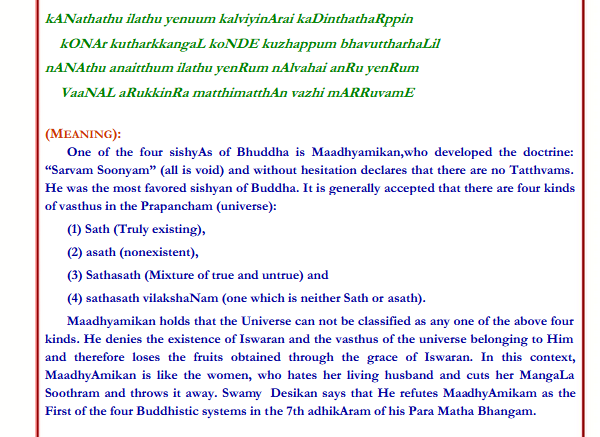
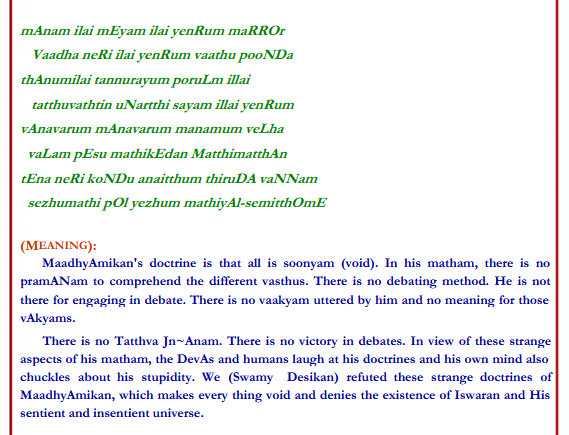
This concern is not merely modern.Many Rival traditions ridiculed such a stance. To Quote for instance from a paraphrasing of the paramatabhanga of the Visistadvaita theologian Veṅkaṭanātha, also known popularly as vedanta desika
 I am particularly interested to see how this issue is treated within different strands of Madhyamaka, such as the Prāsaṅgika and Svātantrika interpretations, and whether later commentators offer systematic responses to these classical critiques from rival schools.
I am particularly interested to see how this issue is treated within different strands of Madhyamaka, such as the Prāsaṅgika and Svātantrika interpretations, and whether later commentators offer systematic responses to these classical critiques from rival schools.
Asked by Albert camus
(73 rep)
Mar 20, 2026, 12:23 PM
Last activity: Mar 20, 2026, 04:28 PM
Last activity: Mar 20, 2026, 04:28 PM